EasyGo: Dispatcher Platform and Apps for 100+ Vehicles
For EasyGo, we built a full dispatcher portal, mobile apps, and automated billing for a taxi operation with 100+ drivers.
Vehicles managed in one dispatcher environment.
Most settlement flows moved beyond the original dispatch setup.
Continuous operational support for drivers and operators.
Rapid fleet growth exposed limits in the original dispatch setup and billing processes.
We delivered a unified operations platform with apps and automated financial workflows.
Data integrity and role-based operational control were built into critical workflows.
- Dispatcher portal for real-time operations
- Mobile apps for drivers and dispatch teams
- Automated ride settlement and reporting
- React
- React Native
- Node.js
- PostgreSQL
- WebSocket
For EasyGo, we delivered a complete technology platform for managing taxi operations, covering a dispatcher portal, mobile apps for drivers and customers, and a partner interface for corporate clients. The scope was practical from day one: the system had to be fast, stable, and ready for daily peak traffic in a real urban environment. This was not a demo product, but core infrastructure directly tied to the company’s operational performance.
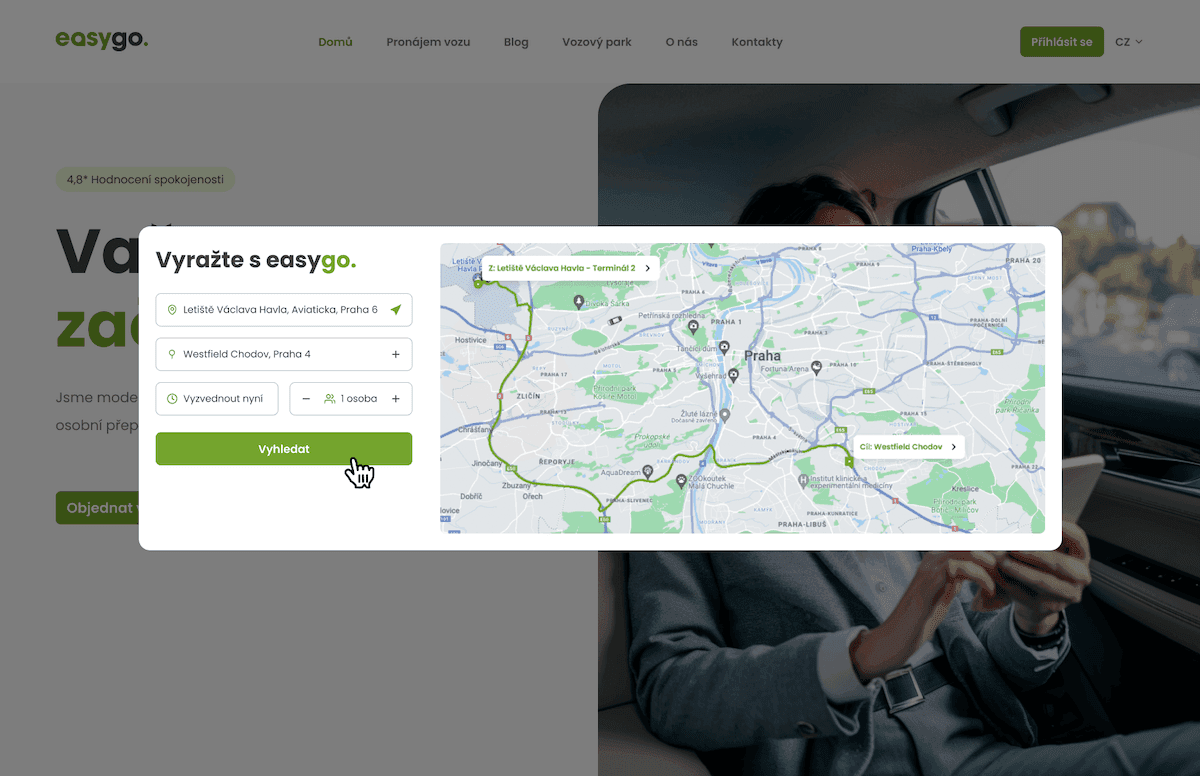
At the center of the solution is the dispatcher portal, where operators manage ride orders, vehicle availability, and trip status in real time. To keep dispatch, driver apps, and customer applications synchronized instantly, we implemented WebSocket communication. The Node.js and PostgreSQL backend provides consistent data processing, event history, and scalable operations as ride volume grows. We focused on clarity and fast decision-making under time pressure.
We developed the mobile apps in React Native to maintain consistent quality across Android and iOS while accelerating delivery. Drivers use the app for ride acceptance, navigation, and trip status, while the internal team gained stronger control over daily operations. A key innovation was automated driver billing and settlement, replacing error-prone workflows from the original dispatch setup. This reduced administrative overhead and made financial closing faster.
The platform also included a partner portal for corporate clients, where companies can track rides, reporting, and requests in one unified interface.
Across the whole solution, we introduced monitoring and operational release rules that allow new versions to be deployed safely without disrupting services.
Today, the system supports more than 100 active vehicles and drivers. EasyGo gained a platform that is not only technically robust but directly usable from a business perspective. We delivered an end-to-end solution, from architecture and implementation to production stabilization and long-term extensibility.
For the next phase, we proposed a roadmap focused on more accurate demand prediction, smarter ride allocation, and expanded reporting for company leadership. With a stable technical foundation in place, EasyGo can roll out new features incrementally without interrupting live operations. The project now supports both daily execution and long-term strategic growth planning.
EasyGo gained a scalable operating model for growth without operational chaos.